
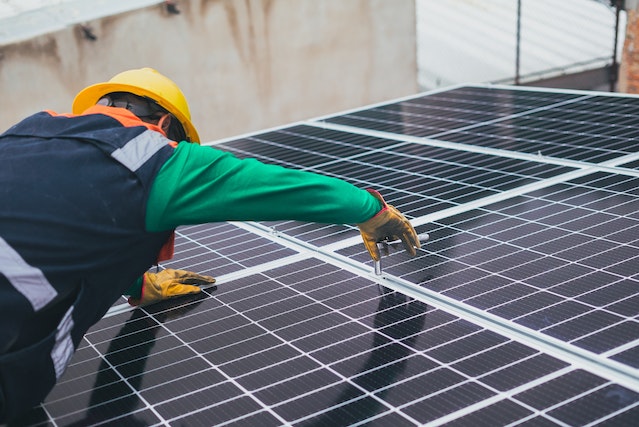
Solar panels, also known as photovoltaic (PV) systems, are becoming increasingly popular for homes and businesses in the UK. They are one of a batch of renewable energy sources that are seeing significant adoption given the current concerns about global warming. Plus, they are often considered to be a good investment financially, with big money savings on energy bills in the long run. So, what are they, how do they work and how can electricians learn more about them to add PV systems installation to their skills profile?

What Is A Solar PV System?
Solar PV systems provide businesses and homes with a renewable source of power from solar radiation. They capture the energy of sunlight and convert it into electricity to power a range of electrical systems and applications. They don’t process any fuel or require external power, but simply harvest the existing rays of the sun.
How Do Solar PV Systems Work?
Solar panels function automatically when light shines on their sensitive cells. Contrary to some claims, they do work on cloudy days and in winter, although they are much more effective when exposed to direct sunlight. Solar PV systems are typically comprised of an array of panels mounted on a roof, or freestanding in a ‘solar farm’ arrangement. The number and configuration of these panels are variable to suit different needs, so installations can be spread over a variety of spaces, large and small. The PV array generates DC electricity from the light that falls on them, which is then processed by an inverter into an AC current.
Modern hybrid inverters also regulate the DC from the panels to be able to charge a set of batteries. Energy not consumed immediately can be stored in these batteries and used later, at night or in low generation periods – e.g. power harvested during the day can be deployed during the night to optimise the use of the generated energy.
Alongside the inverter is a generation meter. Any electricity that is not used immediately or stored in batteries is sent back to the electric supply grid. The generation meter measures the energy fed back to the grid for which tarrifs maybe claimed under the smart energy guarantee scheme.
Benefits Of PV Systems
Once installed, PV systems require little maintenance on the part of the owner and will offer a lifetime of independent energy generation. Although initial installation can be quite expensive, over time, solar panels pay for themselves and then continue to provide virtually free energy. They create no noise, pollution or carbon emissions and are thus a fully sustainable electric power solution. And because they are in modular form, they can be adapted for almost any requirements and extended if and when necessary.
PTT Training For Solar PV Systems
To meet the growing demand for solar PV solutions, Proactive Technical Training is offering a Level 3 two-day course in solar PV systems for electricians. It is designed for experienced electricians and equips them with all they need to know to plan and prepare a solar array, including how to install solar PV systems, energy storage systems and managing the handover of those systems. Key features include in-depth coverage of how solar panels work, plus their design principles, installation, commissioning, handover, maintenance, as well as fault finding and battery storage technology.
Book Your Place On Our Next Course.
Click here to request more information about pricing and course availability, and secure your place today.
The Level 3 Training Course in Solar PV Installations is an advanced level course. More information about basic training for electricians, and the qualifications you need to start a career as an electrical installer, can be found in our free guide: How To Become An Electrician With PTT.
Image source: Pexels


