
In electrical engineering, the term “phase” refers to the distribution of electrical power.
We use alternating current (AC) which means that there is a wave of power which alternates from zero to maximum positive back to zero and then to maximum negative and back to zero. This happens 50 times a second to give a frequency of 50 cycles per second and this is referred to as 50 Hertz (Hz). This wave of power is therefore alternating back and forth 50 times per second.
In single-phase power, the nominal voltage is 230V; this is what most people have in their homes.
230V is a “nominal” figure, so there will be variations above and below this figure. There are two wires or conductors in this single-phase system: Line (also known as phase) and neutral.
The line conductor carries the power in the system; it carries voltage and current and the neutral carries just the current, with a very small voltage. The neutral is still regarded as a “live” conductor.
We also need an earth which gives a low resistance path for any fault currents that may arise.
This is classified as a single phase, two-wire system and is all that is needed for the most cases in a domestic property. Larger premises and industrial or commercial will nearly always require a three-phase supply.
A three-phase system consists of three single phases. The waveform still oscillates from zero to maximum positive, through zero again to maximum negative and back to zero as before; however, the difference is that there are now three waveforms, and they are 120 degrees apart.
We now have three-line conductors that carry the power and the voltage between any of the phases will be a “nominal” 400V “. A neutral is also provided along with an earth. This constitutes a three-phase, 4-wire system.
A three-phase supply is not only around 3 times more powerful than a single-phase supply, but it is also smoother; this is very good when we want to power an electric motor.
For example, let’s take a 50 Amp item of equipment. That is a lot of power and if it were single-phase, we would need a 50 Amp breaker and a 10mm2 cable. If the same load were then distributed across three phases rather than one, we could get away with 20 Amp breaker and 1.5 or perhaps 2.5mm2 cable! This is because the current in each phase would only be 16.7 Amps.
To summarise: a single-phase supply is just one of three phases, so if we want to power a single-phase lighting circuit from a three-phase supply, we can simply connect to any one of the phases and we can energise our 230V circuit. It is the same principle if we wish to supply single-phase power to a dwelling; one phase of a three-phase supply is used.
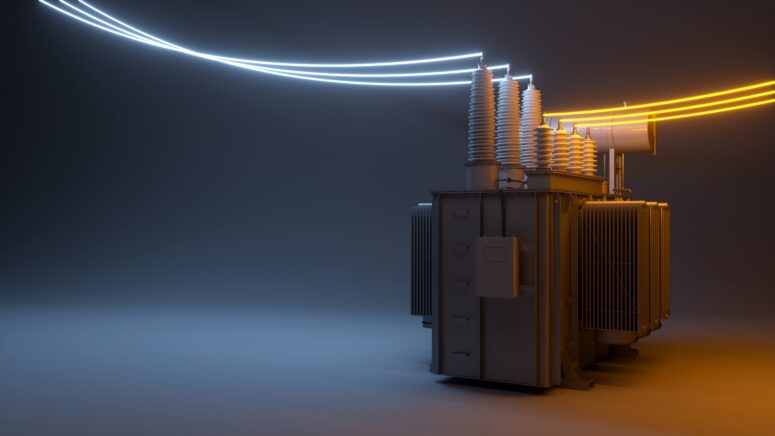
Transformer sub-stations have three-phases at origin and the electricity distributor will arrange a number of properties to be supplied by one of the phases, with other properties in the locality on different phases. How this is done will vary from location to location and how many properties that require power. The distribution network operator will attempt to roughly balance the number of premises on each phase.
You can improve your 3-Phase knowledge and testing skills on our 2-day Introduction to Three Phase course.

Get in touch with one of our training team today to learn more.

Image source: Pixabay


