
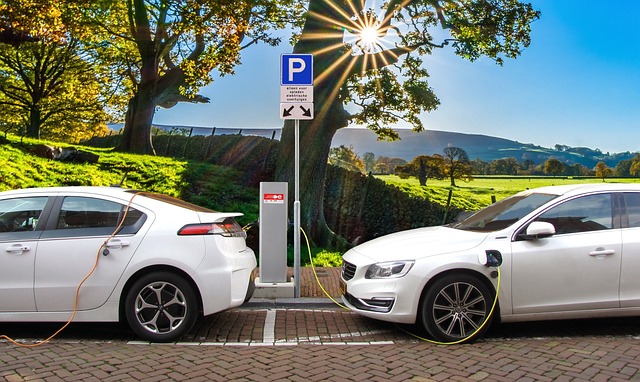
Electric Vehicle (EV) Charging Points are vital to our green future. As petrol-to-electric switch over dates draw near, electric and hybrid car sales increase, and demand for environmentally friendly, sustainable personal transport grows, so will the scope and demand for EV charging.

What Are EV Charging Points?
Electric Vehicle chargers are freestanding recharge points for electric vehicles, powered by the electricity in your homes or workplaces. It takes around one to eight hours for an EV to complete one full recharge.
You can usually find dedicated EV charging points in long-stay car parking spaces outside supermarkets, in car parks, petrol stations, and motorway service stations. Domestic (i.e., driveway) systems are also very popular.
The 4 Varieties Of Charger
Did you know that EV charging points come in 4 distinct types classified by modes of charging?
- Modes 1 and 2 – domestic socket outlets are used. Their household compatibility makes them great for topping up small cars overnight.
- Mode 2. Exactly the same as above but incorporate smart tech on the lead.
- Mode 3 – Wall mounted charger. A faster charger due to the connector and the most common type. You’ll find these mostly in public spaces and metered charge stops (supermarkets etc). They can however also be in domestic properties.
- Mode 4. Usually 3-Phase due to high power. Converted from AC to DC within the charge point. The connections are tethered just like your usual petrol pump. These chargers are usually installed within service stations as they have the infrastructure to support this. These chargers are known as rapid chargers due to their high power.
Electric vehicle batteries vary in intake capabilities. A slow charger connected to a rapid system will only charge at the highest safe rate. Likewise, mismatched adaptors might downgrade charging speeds.
Qualified EV Installers
If you want to design, certify and validate EV systems, it’s worth noting that you must be a qualified electrician before you can sit the course and complete the qualification.
Accredited Competent Persons (i.e., professional electricians) registered with the UK’s Electrical Vehicle Homecharge Scheme (EVHS) automatically qualify as trusted EV installers. If you’re not registered, you can undertake training to gain specific EV accreditation for your field.
Electric Chargepoint Training And More From Proactive Technical Training
Are you a practising or training electrician looking for the best EV installation training?
PTT is proud to provide the new, field-leading City and Guilds Level 3 qualification (2921) in the Design and Installation of EV. Find out more today and book your place on our next course!
 Image Source: Pixabay


